Internal company server for backups and services
9/29/2024 • Keymodel SRL
Keymodel SRL, a company specialized in 2D and 3D printing, needed an internal server mainly used as a secondary backup NAS. The server also had to be ready to host new company services, support the new website, expose selected internal services securely outside the local network, and provide external access through VPN.
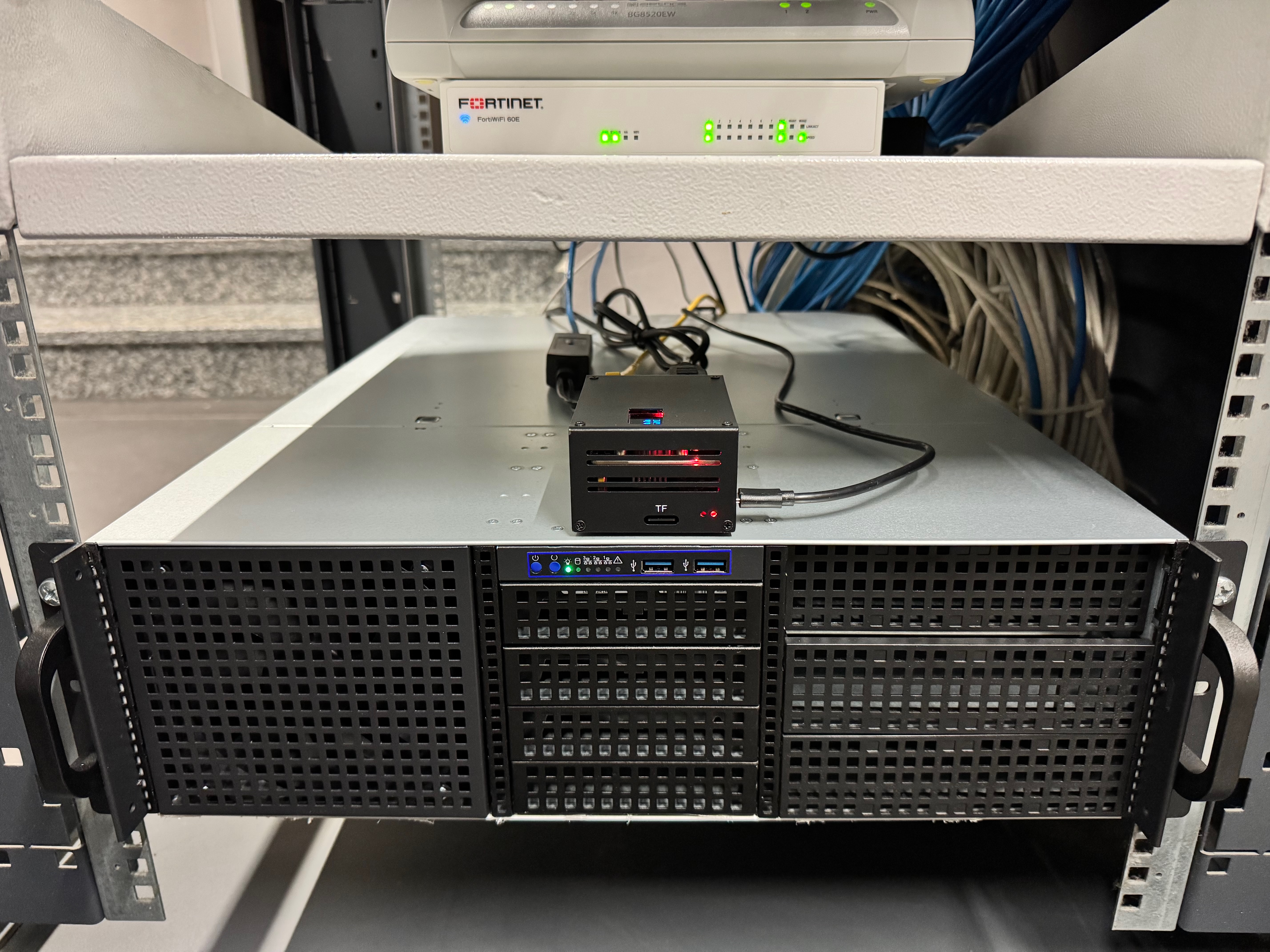
The server had to fit into an existing rack, reusing available hardware where possible. My role was to design the hardware and software architecture, select suitable components, and verify that the final setup could support the required services.
The result is an Intel-based server assembled inside a 3U Inter-Tech IPC 3U-302585 rack chassis. This chassis was chosen because it could host at least four 4 TB hard drives while still leaving space for future upgrades.
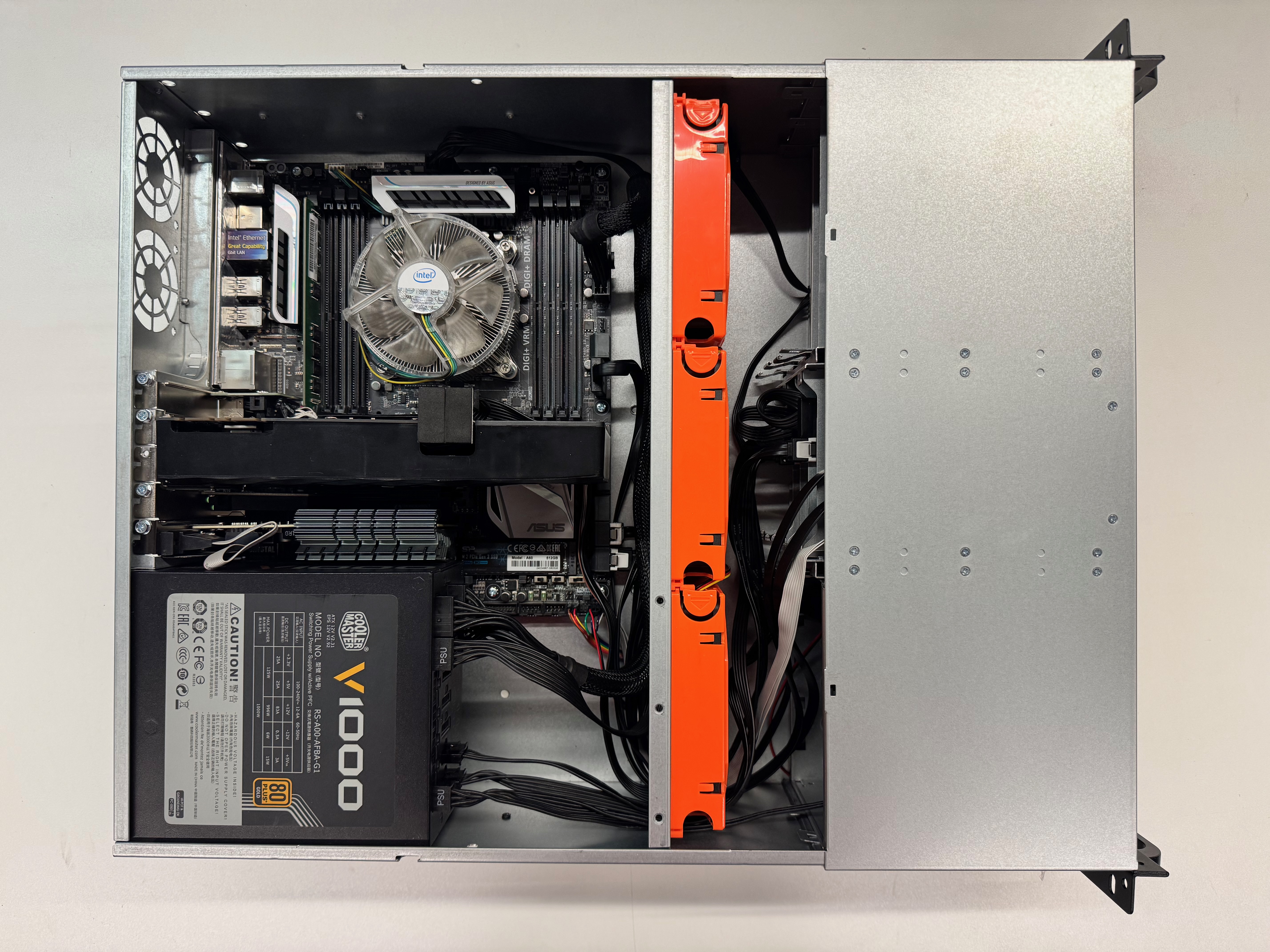
The server uses two graphics cards: one configured as a graphics accelerator and one dedicated to management and remote KVM access. This makes remote troubleshooting, updates, and maintenance easier.
Another important part of the setup is the secondary network interface. This interface was dedicated to the connection toward the DMZ and firewall, separating exposed traffic from internal services and making external access easier to manage.
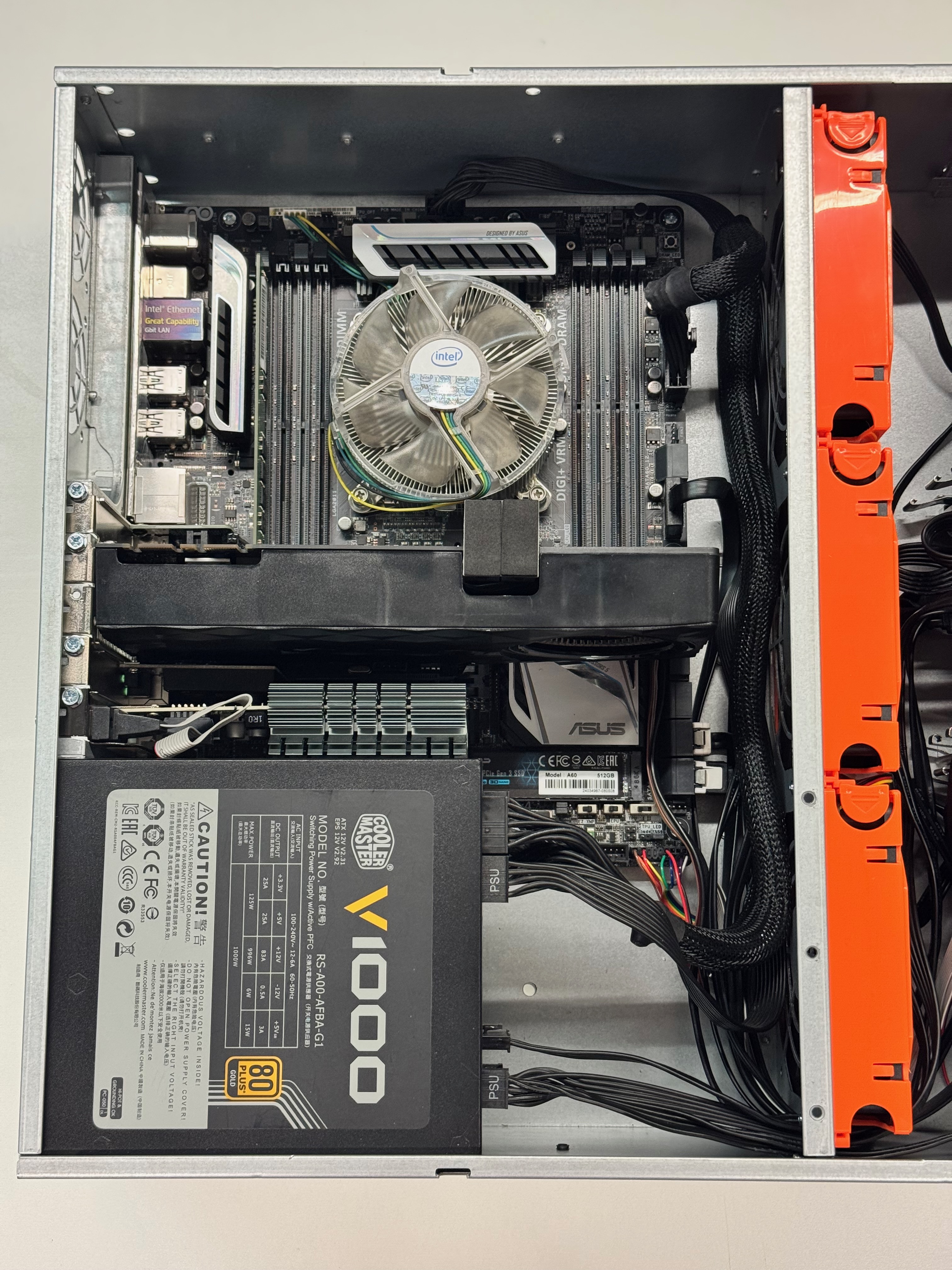
On the software side, the server uses Proxmox as the virtualization platform. This allows the company to manage virtual machines, isolate services, and simplify future changes. One of the first VMs was configured as a secondary NAS, receiving backups from the main NAS through rsync.
After the initial installation, I also take care of periodic maintenance: updates, service checks, installation of new requested features, and general verification of the system.
This work exposed me to a real infrastructure project, where technical choices have to consider performance, company constraints, available hardware, future maintenance, and network security. I strengthened skills in hardware assembly, rack server management, Proxmox virtualization, NAS backup flows, service separation, and business-oriented network configuration.
It also helped me improve how I communicate with a client: understanding needs, turning them into a concrete solution, explaining technical choices, and keeping the system updated over time.